

LEGACY PLANNING
Unlocking a Clear Path for Every Age & Stage
Whether you're 25 or 85, it's never too early—or too late—to start planning for the future. Legacy planning isn't just for retirees or the wealthy; it's for anyone who cares about protecting what matters most.
I’d like to help simplify the process: break it down into easy, actionable steps that bridge the gap between today and tomorrow. It's about making sure your wishes are honored, and your loved ones are taken care of, without the overwhelm. It's simpler than you think and more important than you know.

What spurred my passion for legacy planning?
Before becoming a real estate broker in 2016, I was a personal banker. Helping clients navigate their finances often requires involvement with sensitive subject matters such as assisting family members close out deceased loved one’s accounts. I will never forget the day when three siblings walked in to do just that. One sibling traveled from out of state, and tensions were running high between them. None of them knew what documents were needed, how to get them or even who they could turn to. The lack of preparedness added extra frustration and stress, and ultimately could have been minimized.
Flash forward to the early stages of my real estate career, this experience was still on my mind. Recalling the stress and emotions of that day, I knew that I wanted to help bridge that gap and bring value to my clients by helping them achieve the comfort legacy planning provides. As a real estate professional, I have dug into the steps required to help others avoid this and even became a Senior Real Estate Specialist (SRES).
LEGACY PLANNING 101:
Less Overwhelming and More Affordable Than You Think
Legacy planning often seems daunting and costly, but it doesn’t have to be. With the right approach, you can create a simple, effective plan that reflects your wishes without breaking the bank. By taking small, manageable steps, you can ensure peace of mind for yourself and your loved ones, knowing your affairs are in order.
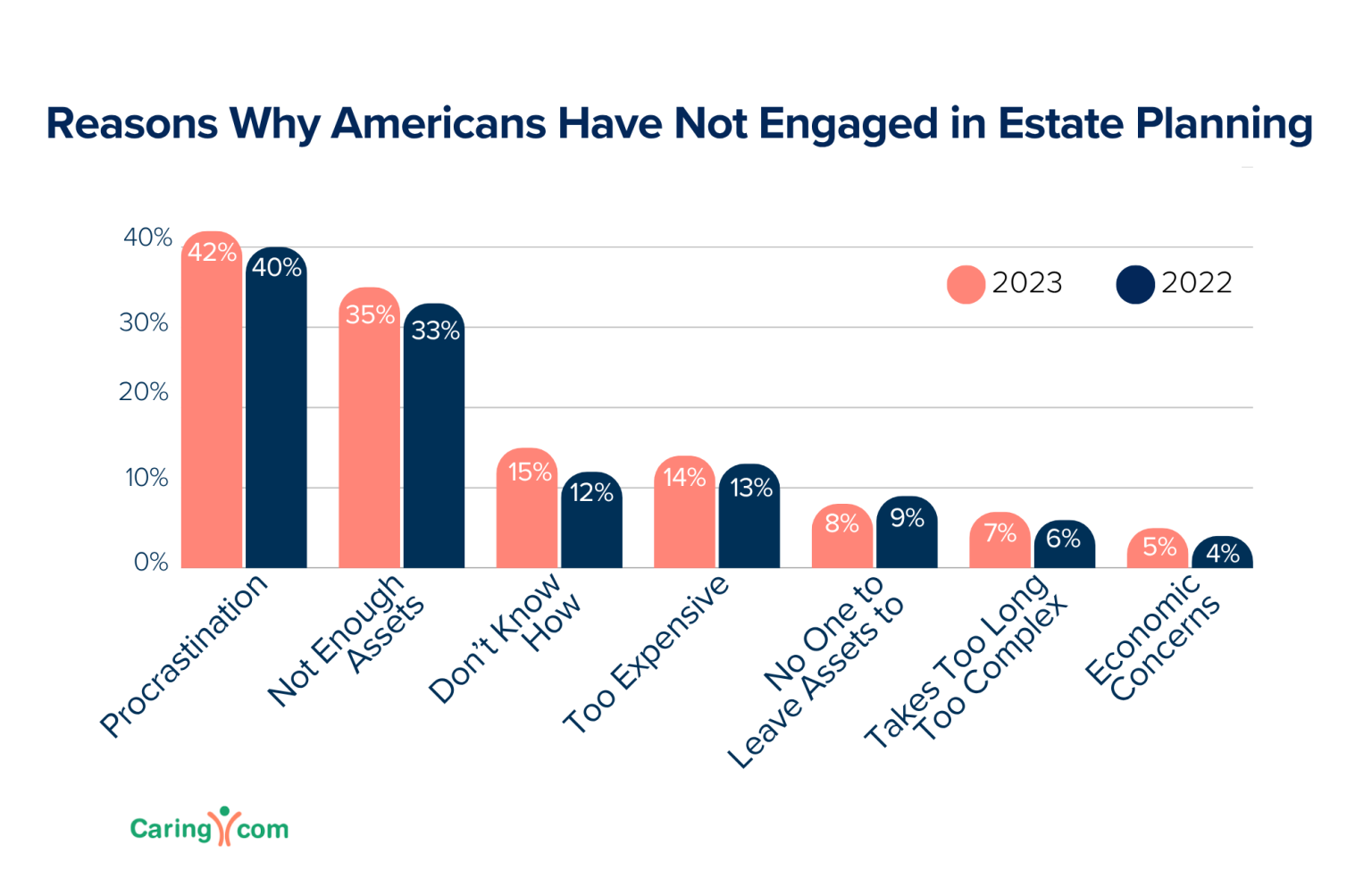
The majority of Americans don’t have any form of legacy planning in place, despite the fact that it is increasingly recognized as important.
Many people hesitate to start the process due to the discomfort and difficulty associated with the topic. People also generally expect legacy planning to be expensive, complex, and emotional, so it gets tabled for “later”.
Here are some simple steps to follow to make this easier, more attainable, and can be done in as little as 4-6 weeks.
Identify a trusted attorney and have a phone consultation.
Complete the prepared questionnaire and inventory exercise.
Review the provided draft from the attorney.
Schedule a call, zoom or in-person meeting to review the finalized plan.
Sign documents with a notary.
Personally, I found going through the process with the help of a local, Edmonds professional to be an easy process, and one that wasn’t as expensive as I anticipated.
I have access to excellent resources in our area, so please don’t hesitate to reach out if you would like to talk to a professional about what is right for you.
LEGACY PLANNING 102:
WILLS VS. LIVING TRUSTS
It's never too early, or too late, to plan. The right time is now! It’s a good idea to secure your legacy while you're building it with either a will or a living trust.
We’d all prefer not to think about it, but it’s also the one thing that most of us will deal with at some point: managing the legal and financial affairs of a loved one’s estate. Generally speaking, the deceased’s affairs will be managed through either the administration of their trust, or probate.
Probate
Probate is the legal process of validating a deceased person’s will and overseeing the distribution of their assets and settling their debts. Overseen by the court, it ensures that the deceased’s wishes are carried out in a fair and legal manner. Probate is not always necessary. Smaller estates, those with well-structured trusts, or those with assets that pass directly to beneficiaries (life insurance policies or retirement accounts, etc.) may avoid probate.
Trust
A trust is a legal arrangement where a person transfers ownership of assets into a trust account to be managed by a trustee. One of the primary advantages of trusts is their ability to bypass the probate process.
There are pros and cons to both, but it will always be better to have something in place than nothing. I have access to excellent resources, so please reach out if you would like to talk to a professional about what is right for you.
LEGACY PLANNING 103:
WHAT HAPPENS TO A LIFETIME OF STUFF?
This is your sign to make this year the year of reducing the amount of stuff in your home. Will you be making a move this year? Or moving your parents or a family member? Downsizing can be stressful and emotional, and it’s never too early to begin. Use these tips to simplify the process and find clarity in your decision.
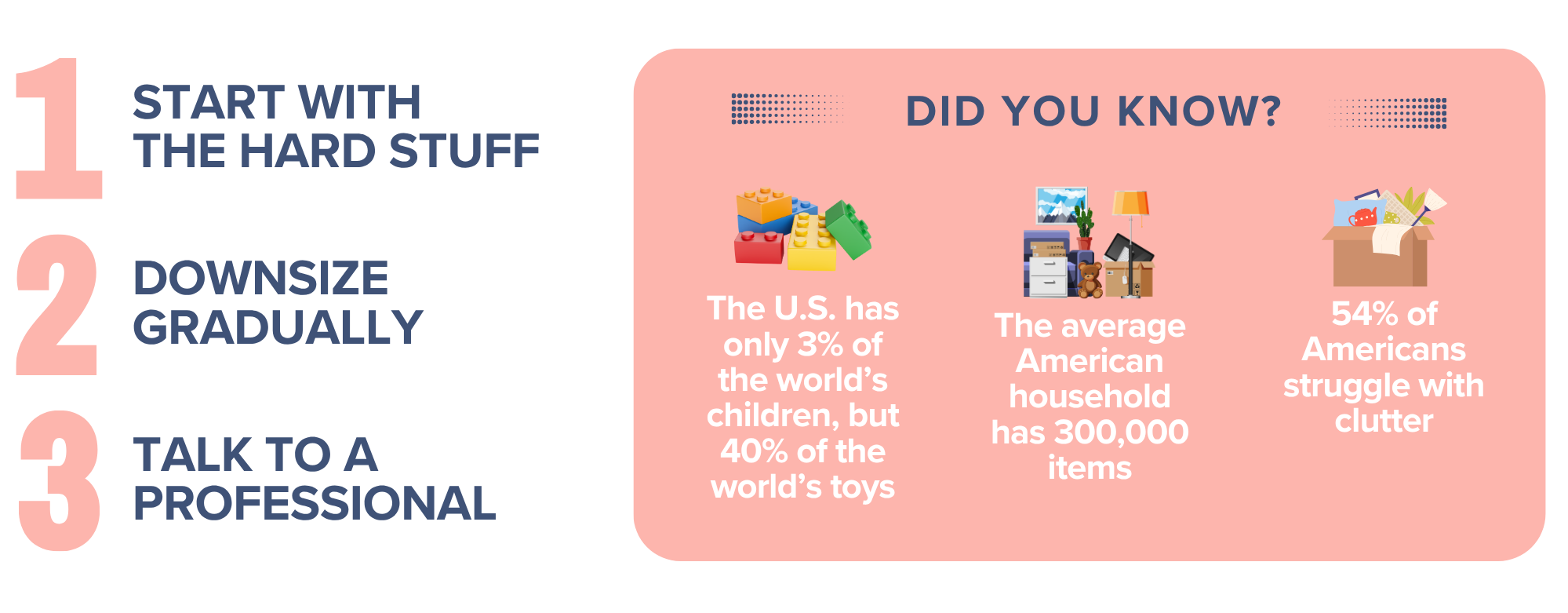
Make a list of the five or six possessions you value the most.
Not necessarily financially valuable, but the items that tell the story of your life, of your family, and your relatives that came before you. Be sure to place these items in a safe location and let your family and friends know those items stay no matter what.
Start with the rooms where you have stored the least-used items.
Before entering the room, decide to throw out anything: broken, cracked, or deteriorated. Next, get started sorting the items you find most challenging to part with, such as: sentimental items, family heirlooms; or items that are no longer needed.
Downsizing is a process - not an event.
Do not over-commit yourself and take things one step at a time. As a result, the transition will go as smoothly as possible. It is better to take your time, so you don’t experience a great deal of stress and upheaval.
Consider consulting a professional before downsizing.
Professionals can help you: assess your needs, make suggestions for downsizing and/or organizing, and provide tips for a smooth transition. I can put you in touch with a local professional if you are interested. Reach out anytime!
LEGACY PLANNING 104:
UNDERSTANDING SENIOR LIVING COMMUNITIES
The term senior living usually refers to a spectrum of residential options for older adults, ranging in the degree of services and amenities provided. Most senior living options provide meals and social opportunities for residents, but only some of these communities offer personal care or medical services. In general, senior living communities aim for a balance between honoring an older adult’s independence and providing the level of care needed.
Independent Living
WHO IS IT FOR?
Older adults in relatively good health wanting a maintenance-free lifestyle, access to social activities, and on-site amenities, like fitness centers & movie theaters.WHAT CARE IS PROVIDED?
Usually a meal plan & light housekeeping. Personal care & medical services not provided.Assisted Living
WHO IS IT FOR?
Older adults no longer able to live independently, & may need assistance with medication management & assistance with activities of daily living (ADLs), like bathing and dressing.WHAT CARE IS PROVIDED?
Meals & snacks, housekeeping, laundry, & ADLs as needed.Nursing Home
WHO IS IT FOR?
Older adults needing ongoing skilled nursing care, which can no longer be provided at home or in assisted living.WHAT CARE IS PROVIDED?
Required to have a registered nurse (RN) on staff 24/7 to provide skilled nursing services.Memory Care
WHO IS IT FOR?
Older adults living with Alzheimer’s or another form of dementia.WHAT CARE IS PROVIDED?
Some, but not all, will offer skilled nursing care & have secured entrances and exits.In-Home Care
WHO IS IT FOR?
Older adults needing additional services to help them age in place.WHAT CARE IS PROVIDED?
A range of care, from companionship services to skilled nursing, provided by professional caregivers, including CNAs or RNs.Adult Family Home
WHO IS IT FOR?
Older adults no longer able to live independently, & may need assistance with medication management & assistance with activities of daily living (ADLs), like bathing and dressing.WHAT CARE IS PROVIDED?
Meals & snacks, housekeeping, laundry, & ADLs as needed, as well as a range of nursing care and specialized care.

It is key to be equipped with the knowledge to help navigate these life transitions based on your specific needs. Whether you are planning for yourself or a loved one, it can be overwhelming, and the planning can't start too early. The information on the front is a great base level to help get you started. Getting out and touring in person will provide insights and understanding. I can also put you in touch with service providers that you can hire for guidance on this process.
If you would like to discuss these options further or any other obstacles that might be getting in your or your loved one's way, please reach out. While turning the page to the next chapter in life can be intimidating, there are rewards. I'd love to help you chart your plan and point you in a meaningful and safe direction through my connections and resources.
Things to consider when looking at senior living:
- Costs & Finances
- Location & Surroundings
- Amenities, Services, & Activities
- Health Care Options
- Food
- Transportation
- Pet Policy
- Most importantly, will your needs be met, and can you envision yourself living there.
LEGACY PLANNING 104:
UNDERSTANDING POWER OF ATTORNEY
A Power of Attorney is an essential estate planning tool and should be included with a will or trust. Under Washington State law, a power of attorney lets you choose a trusted friend or relative to help you with your finances and/or health care decisions while you are alive. After you sign it, the person you choose can take the power of attorney to your medical providers, bank, school, and other places to make decisions and sign contracts just as if they were you.
What are the Types of Powers of Attorney?
Durable POA
Remains in effect even if you become incapacitated. It’s a way to be prepared for eventualities, hard as they might be to contemplate.
Non-Durable POA
Ends if you become incapacitated. This type of POA tends to be limited in scope – used for a one-time task or finite period of time.
General POA
Allows your chosen agent to act on your behalf in all matters; can be revoked at any time while you are able. It allows you to limit the fields of authority, such as authorization to pay medical bills but not make medical decisions.
Medical POA
Allows you to appoint someone to make healthcare decisions for you in the event that you are unable to make such decisions for yourself. It will not go into effect unless you become incapacitated.
Financial POA
Gives your agent the authority to handle financial matters for you and can have different levels of durability. A durable financial POA allows your agent to handle these matters after you’re no longer able to.
Springing POA
Doesn’t “spring” into effect until a triggering event. You specify the conditions that must be met before this POA takes effect. Once those conditions are met, your agent will have POA until such time as those conditions expire.
My goal is for legacy planning to become normal and accessible. To remove fear from the conversation, and help bridge the gap for you.
My entire professional career has been focused on helping people. Over the last eight years, I have seen first-hand how undeniably valuable it is to be prepared for the unknown. Along with helping clients navigate real estate transactions, prepare properties and make big moves, I am committed to simultaneously bringing awareness and education around legacy planning. Owning a home is typically a person's largest investment, the value my clients receive is not limited to the sale, it is rooted in creating a protected investment.
As a homeowner, and a mother of a toddler, I knew it was paramount to put a plan in place to protect all of my loved ones from unnecessary stress and difficulty. Going through the process myself showed me that legacy planning is a gift of comfort and protection for those I care for most. Knowing that many people my age do not have legacy planning in place, think it is necessary, or have the resources to turn to, is the very reason Legacy Care Collection was established.
Please reach out if you have questions, would like to be connected with resources, or just have a conversation.
Ready to make a move?
Whether buying or selling, Kristine is here to help you cross the finish line to a successful real estate transaction.
